How to Use an OBD2 Scanner for Full-System Diagnostics
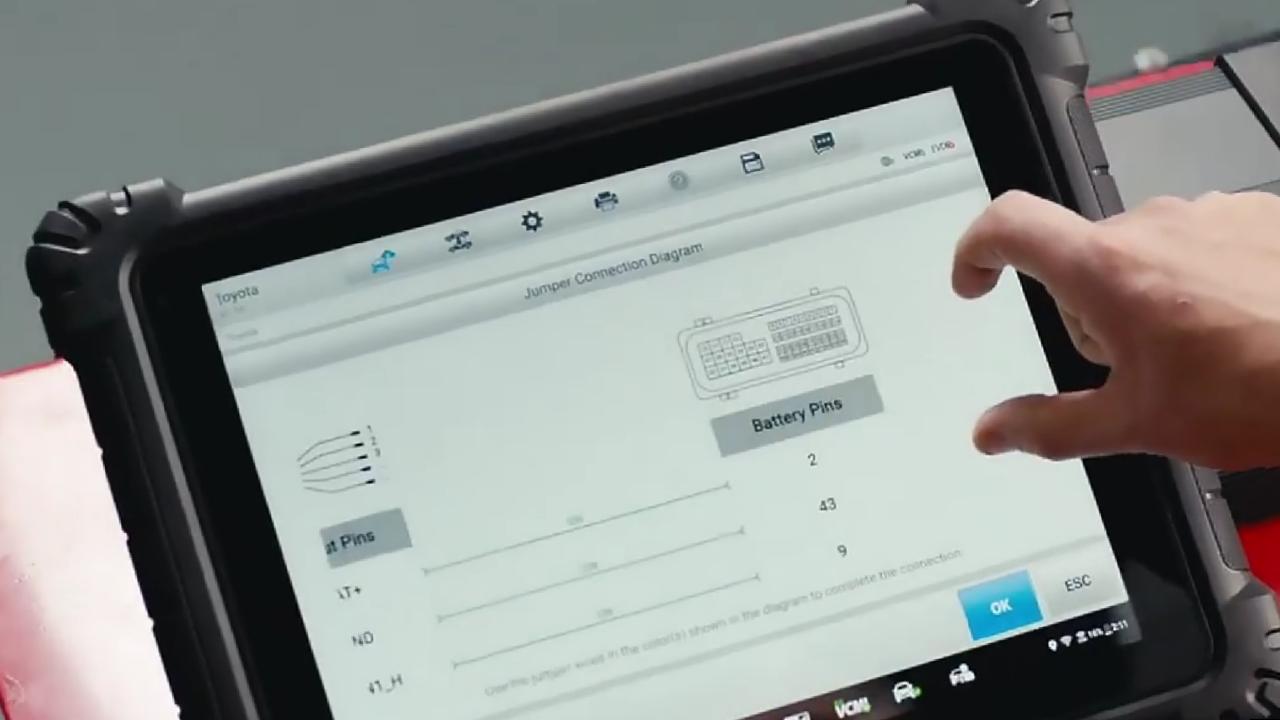
Contemporary cars are built on a large number of interconnected systems, and even when a problem occurs, it might not be confined to a single area. An OBD2 scanner helps access these systems and read what the vehicle is reporting. The autel obd scanner is designed to provide a complete picture of the system rather than just simple check-ups. Understanding how to use such a scanner enables users to detect problems more clearly and save time and money on unnecessary repairs.
Understanding the OBD2 Connection
All recent cars have an OBD2 port, typically under the dashboard. This port serves as the primary diagnostics port. When the scanner is attached, it occasionally directs to the vehicle’s control units. This connection will allow the tool to read data, discover the faults, and communicate with the rest of the systems.
Powering and Starting the Scanner
Once the scanner has been connected, one then turns it on and sets it to the desired position for the vehicle’s ignition. The scanner will initiate some communication with the vehicle. It will, in most cases, take the user through the initial setup process, making it easier to kick off, even for the first-time user.
Vehicle Identification
The scanner must know the first-time vehicle it is handling. This can be automatically identified with numerous tools via VIN recognition. This is to ensure that the appropriate systems and data are loaded. There are vendors, such as Lenkor, that offer tools configured correctly, making this process easier and less prone to setup mistakes.
Running a Full-System Scan
A complete scan of the vehicle can commence once it is detected. This is done to verify all available control modules, such as engine, transmission, braking, and safety systems. The tool does not scan each system individually; instead, it scans everything in a vehicle in a single run, providing a comprehensive picture of the vehicle.
Reading Fault Codes
The tool shows fault codes stored in every module after the scan. Such codes signify the problem areas. Knowing them allows you to quickly reduce the problem. The scanner can also have short descriptions so that it does not require referencing to read the results.
Clearing Codes After Repair
When the repairs are done, the scanner will be able to clear the fault codes. It is one step that restarts the system and determines whether the problem has been fixed. When a code is re-emitted after clearance, more often than not, a problem remains and does not require additional processing.
Viewing Live Data
Real-time information displays the car’s behavior. When the engine is running, the scanner displays sensor and system readings. This helps detect abnormal behavior that does not constitute a fault code. As an example, a swaying reading can be an indicator of latent issues.
Using Advanced Functions
Other scanners also have optional features such as system resets, coding, and guided tests. Tools such as the Autel MaxiSys Ultra EV can also be used to perform more complex tests, such as battery analysis for electric vehicles. Lenkor offers such high-level tools, with appropriate settings, that assist a user with simple and more complex diagnostics under a single roof.
Understanding System Relationships
It is not only about faults in individual systems. It also helps users observe how various systems interrelate. An issue in one module can affect another. The scanner will help detect root causes rather than different symptoms by going through all systems.
Generating Diagnostic Reports
Most scanners can generate reports after a scan. These reports present system status, fault codes, and test results. They can be employed to maintain records and to share the information with others. This provides clarity in workshop environments when explaining issues to customers.
Practical Use in Workshops
An OBD2 scanner is time-saving in daily workshop use, as it eliminates guesswork. Technicians also use system data rather than manual checks to determine repairs. Lenkor facilitates this procedure by providing globally compatible tools that are available much faster, enabling workshops to maintain consistent diagnostic work.
Common Mistakes to Avoid
When a scanner is used erroneously, it will cause confusion, omissions, failure to adhere to warnings, and premature clearance of codes, which may conceal issues. One should be very keen on the process and review all the information before making decisions. This guarantees the right outcomes.
Conclusion
Full-system diagnostics with an OBD 2 scanner is a systematic procedure that requires attaching to the vehicle, scanning every module, and interpreting the results. The Autel MaxiSys Ultra EV is a collection of tools that can streamline this process, as several functions are combined into a single device. Users will be able to spot problems more easily and implement repairs more precisely with the support of providers such as Lenkor.