richcontentdaily.com
  • Home
  • Business
  • contact
Home - Archives for Jeremy Wall - Page 6
Author

Jeremy Wall

Avatar photo
Jeremy Wall

Jeremy Wall who graduated from Yale University and works for national television. He is very interested in manufacturing related topics and often gives his own opinions and opinions.

Uncategorized

Your Swimming Pool Pump solutions

by Jeremy Wall August 26, 2021
written by Jeremy Wall

Are you looking for pool pumps, worry not Aquagem has got you covered. Companies have come up to solve your swimming problems. Aquagem offers you the best inverter pool pump which is high tech inverter. This pool pump is very quiet and it is easy to control water backwash with only one click. Aquagem pool pumps have bigger water flow and consume less energy and are also very easy to control.

Let look at some of the types of pool pumps that you can choose from.

Inverpro pool pump

It feels irritating and uncomfortable when the big pool pumps are operational. Many companies have been on their feet to achieve the most silent pool pumps. Inverpro pool pump by aquagem is the most silent inverter pool pump. Aquagem is introducing this inner silence technology to filtration pumps. The inverpro has an inbuilt unique feature that enables it to operate between 40%-100% thus fulfilling different tasks like backwash, proper filtration and also controlling motor drive for optimal silent operation. This helps in controlling the sound level from a high pitch 60-70 dBA to a very low level that is 30 times quieter than the traditional on-off pumps.

PFlow Inverter pool pumps

This inner silence pool pump was launched in the year 2020 by Aquagem to create a solution for heavy duties like backwash. You are tired of distractions of noise from the heave pool pump, this could be your option. The PFlow is 20 times quite at full capacity as it goes down to 36.6 dB (A) @ 1m. This is achieved as PFlow generates 16000 calculations per Secord hence controlling each care component and the motor. PF low inverter pool pumps consume low power too and are thus affordable to use. It has an automatic timer

XFlow Inverter pool pumps

XFlow is another outstanding version of inverter pool pumps. It can be the best fit for your residence due to its ease of operation and the minimum sound pressure of up to 37Bd[A] 1-meter distance. Moreover, it is easy to operate to the integration of a touch screen panel that makes its processes easy. It also has a thermal protector, SuS316 mechanical seal which makes it strong and durable.

Variable Speed pump

Gemflow VS

The Gemflow VS variable speed pump is one of the most selling Aquagem products. It is widely used due to its high energy efficiency and quite a performance. This attribute makes it most suitable to be used in swimming pools.

It can saves energy up to 80%A single-speed pool pump consumes about 16% of the whole pool system. This makes Gemflow VS variable speed the most efficient solution for a better pool. The Gemflow VS allows you to enjoy a quiet and relaxing swimming pool experience as it can reduce sounds level by 25%.

It has long working hours

Maximum suction range: 2.5m

It is IP55 and Class F

Smart touch interface design

Frequency Inverter pool pump

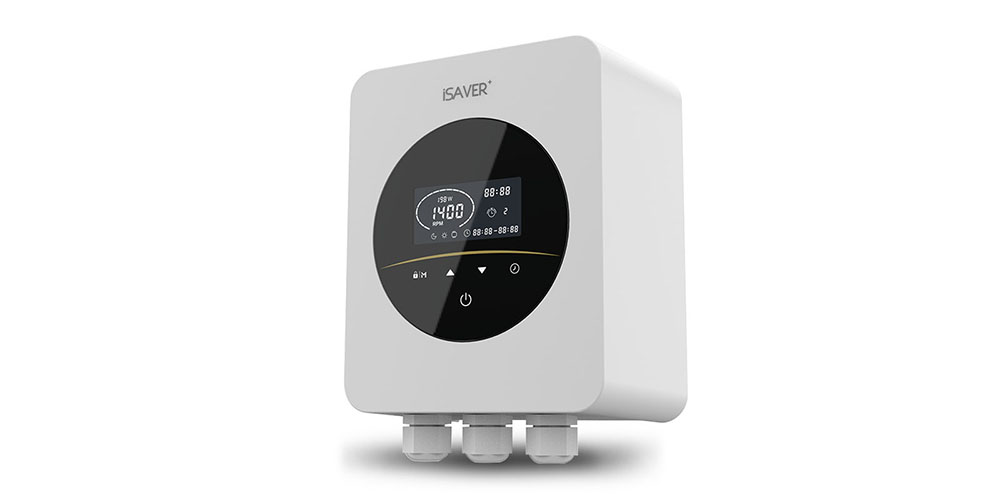
ISAVER+

ISAVER+ is the first touch screen frequency converter I iSAVER+

Saves up to 80% at low speed

It reduces the level of pump sound by 25%

Optional timers suitable for different applications

Requires less chemical as it achieves better filtration performance at low speed

The motor and other equipment have a long life span

Great contribution on reducing GHC

August 26, 2021 0 comment
0 FacebookTwitterPinterestEmail
Business

Best strategies to Grow your Import Business

by Jeremy Wall August 25, 2021
written by Jeremy Wall

Shipping goods from overseas for business purposes has been on the rise in recent years. As an entrepreneur, you will want to minimize costs and maximize the output rather than profits. You can’t understate China imports to the USA, for instance, for the past few years. The challenge is thriving through the challenging economic moments, especially amidst of pandemics. This guide will give you a detailed approach to expanding your China import profit margins tremendously in an easy way.

Take Advantage of Government-regulated Trading Program

Some countries or states have developed trade programs to ensure free trade. The advantage of using government-regulated trade programs is that you will get numerous favors from the government. You are likely to get a loan for your business that you can use as capital. Using government trade programs will enable access waivers and import tax reductions compared to making a man solo trade. In most cases, the government will regulate the flow of certain goods to save these trades, which means you will likely have a ready and high market for your goods.

Local Trade Associations

It is easy to increase your import benefits if you are a member of a local trade organization. Local trade organizations protect their members from exploitations and unhealthy competition in the market. You are likely to get trade tips and seminars in this kind of association. You will be able to get genuine supplier links and explore new businesses if you join these kinds of associations.

Supply Chain Analysis

If you want to be a king in a game having the proper knowledge and diversified information is the key to results. It would be best to do reviews and analyses of the existing business to program your best approach. It is best if you engage in import business forums aimed at reducing operational costs and import taxes.

Third-party Risk Assessment Entities

It is most appropriate if you could have a consultant to assess the unforeseen risks in your business. Assessing import risks puts you in the best position to act appropriately in case of an anomaly occurring in the process of importing. Insuring your imported goods will also be a plus for your business. It is best if you develop alternatives from the analysis of your risk assessment expert.

Niche Development

One of the best strategies to succeed in the import business is to come up with unexplored niches. If venturing into an existing niche, it is best to add up a few tricks that are not in the market or instead offer what your competitors are not showing. Do a cost per product analysis and the rate at which you can sell your products to know your demand rate. It is best if you focus on products that are cheaper yet mostly consumed.

Besides the above strategies, it is best to do extensive market research before importing any product. Develop clear, achievable expectations and goals for your business. With time, if the business is improving, it will be best to increase the quantity of the goods you import. Employing the above tips will see your business expanding rapidly with maximum profits.

August 25, 2021 0 comment
0 FacebookTwitterPinterestEmail
Business

A Step By Step Guide For Importing Chinese Goods

by Jeremy Wall August 24, 2021
written by Jeremy Wall

Amazon is the leading eCommerce platform in the world. Many people import cheap goods from China to sell on Amazon to make a tremendous profit. Importing from China is beneficial because of the low prices and the wide range of products. This post provides a guide for importing Chinese. 

A guide for importing Chinese products

The following is a step by step guide for importing products from China

Step 1: Research your product

For an online seller, you probably want to sell a variety of products. However, you ought to be careful not to take on too much. This could cause you to feel overwhelmed. It would therefore be wise to choose a niche and understand it. The internet is the best place to research your product. Part of your research should be knowing whether you are going to do well in your market. Also, try and figure out how you will penetrate the market and every other important detail you ought to know about the product. The results of the research will help you make wise and informed decisions.

Step 2: Find a sourcing agent

Once you have understood everything you need to know about your product, the next step is to find it. This can be very challenging, especially if you are not a China local. This is where sourcing agents come in. A sourcing agent will act as a go-between between you and the supplier from China. Finding a sourcing agent will save you from the trouble of traveling to and from China to get products to sell on Amazon. It will also eliminate the hassle of working with Chinese manufacturers, especially if you do not speak the same language. When finding a sourcing agent to work with, it would help to consider the following factors;

  • Licensing- you need a sourcing agent with a proper license
  • Trustworthiness- you need an agent that you can count on to carry out all their functions
  • Reliability and dependability- you need to be sure that the company will deliver
  • Experienced- hiring a company that knows what they are doing will give you peace of mind
  • Communication- the sourcing agent needs to be an effective communicator

Once you have found the right sourcing agent, you can assign them to find the best suppliers for your product. The sourcing agent is also in charge of building a relationship with the suppliers and ensuring that you receive the best products on time.

Step 3: Start selling

You can forget about all the hassles of finding and shipping products from China with a sourcing agent. The agent will ensure everything is handled, so you have to wait for the products to arrive. If you are planning to sell on Amazon, you do not need to wait for the products to get delivered to list them on the platform.

Conclusion

You can also choose to take the traditional route and not work with a sourcing agent. However, if you choose this route, you will have to find the products by researching the available suppliers in China, establishing a relationship with them, placing orders, and importing the products. This can be a lot of work.

August 24, 2021 0 comment
0 FacebookTwitterPinterestEmail
Uncategorized

Why Are Solar Street Lights Important?

by Jeremy Wall August 20, 2021
written by Jeremy Wall

Solar street lights are slowly replacing standard public street lights. These lights have semiconductor solar cells for energy, upkeep-free regulated batteries for storage, and incredibly shiny LED bulbs for illumination. It also has a sophisticated charging and discharging regulator that regulates their operation.

What comprises solar street lights?

Solar street lights comprises a variety of materials. They include; an LED bulb for maximum brightness, a solar cell to gather solar radiation, backup batteries, a solar street lightbulb regulator, a lamp mast, and other components.

Their panels consist of one crystalline silicon and polycrystalline silicon, a strong LED supplier, a regulator mounted on the light mast, backup batteries, a Valve Regulated Lead Acid (VRLA) cell, and a gel battery.

What is the operation of solar street lights like?

When sun rays make contact with the solar cells, the solar panel absorbs solar power. It then transforms this power into electrical energy, all within the supervision of the sophisticated regulator.

During the day, the solar batteries charge the storage battery, and at night, it turns the LED light on. The regulator is critical in preventing overcharging or over-discharging of the battery bank.

Solar street lights layout.

  1. The cost of integrated solar street lights is among the most significant factors limiting their advancement. For example, a double light’s solar cell costs $700, and the power supply costs $500. This means that the solar light’s applicability is severely limited due to the hefty expenditure.
  1. The storage battery’s service durability should also be factored into the budgeting process. Despite having a 3 to 5-year guarantee, the storage battery can never be powered up after use for about a half-year.

On persistent wet periods, this could affect regular outdoor lighting. Thus, high-quality batteries are more appropriate.

  1. Robbery of storage batteries, which results in unusual lighting and higher expenses, should be guarded against. So, technicians should always take precautions against robbery, to avoid reinforcement of the batteries.

Benefits of solar street lights

Solar street lighting has many benefits, and some of them include:

  1. Installing a solar street light is less complicated than installing other types of street lights. To do this, mix some concrete, drill a one-meter-deep trench and screw it in place.

Moreover, the intricate patterns required by regular lights will not be needed for solar street lighting.

  1. Solar street lights can minimize the expenses spent on repairs and power, using a series connection.
  1. Solar street lamps, a form of renewable power, helps to improve the performance of human ecosystems residential areas, while also lowering property maintenance costs. This means that they also provide environmental benefits, saves energy, are cheap to maintain, and are simple to set up.
  1. Solar street lights last longer than conventional street lights. Compared to a low-pressure sodium light, which has a lifespan of 18,000 hours, solar street lights can last for around five to ten years.

Conclusion

Solar street lights are easy to maintain and install, and their importance can never be overemphasized. We have discussed some of their advantages in this article.

August 20, 2021 0 comment
0 FacebookTwitterPinterestEmail
Industry

The Basics and Applications of Cold Forging

by Jeremy Wall August 11, 2021
written by Jeremy Wall

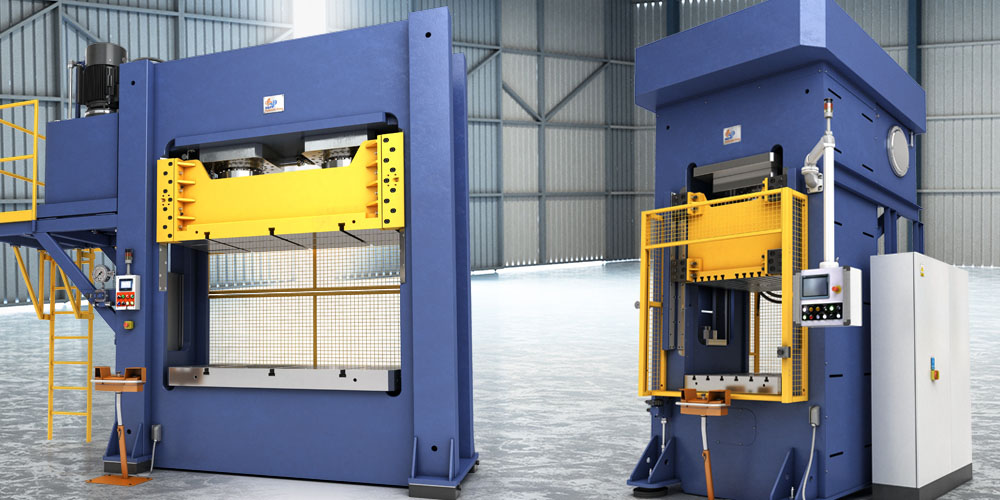
Among several manufacturing processes, the forging technology is one with a special place since it can easily get used to manufacture parts with mechanical properties and a nominal waste of materials. Read this blog for more on the cold forging application.

Understanding process selection in cold forging

Process selection, coupled with optimization is essential to forging processes because of the increasing material costs. This blog post reviews the fundamentals of technology forging, the principal variables of a forging process. Also, computer-aided styles like finite element analysis used for forging processes can be ideal for tooling design.

The rise in the use of cold forging in industries

In today’s world of manufacturing several products, there is an alarming shortage of materials for production. There is also an increase in pressure in demand to reduce costs. That is why most manufacturers are now turning to cold forging as a primary method for production. It is because it’s one of the most suitable methods compared to other forms of forging.

Why cold forging is famously used for manufacturing products

Cold forging is prominent for its applications in different industrial sectors. It requires only a few pieces of material for the manufacturers to reach their objectives. The technology that utilizes an innovative design with process sequence processing also applies lesser raw materials while imparting a greater strength to metallic components.

Over and above, cold forging has proven to help achieve specific required shapes. Often, these shapes need little finishing. For many manufacturers, a completely contained compression coupled with an extrusion metal flow and a close tolerance component would be the ideal type of extrusion. And because the production rates are incredibly high in die life, tool designs coupled with manufacturers are essential for the reliable production of various parts.

Major applications and long-term benefits

1. Enabling the manufacture of more vital metals

Technology research, coupled with cold forging investment, shows several benefits to using cold forging applications. One of these benefits includes enabling the manufacture of stronger metals using extruded shafts. Cold forging also allows the possible manufacture of a net shape and near net shape product with a tolerance of up to 10 millimeters.

2. Enabling the manufacture of metals using higher speeds

Cold forging is the one forming method that will enable you to enjoy launching a new product of high quality at high speed. Compared to hot forging, this method is way efficient and straightforward. Besides, it also allows you to have better control over other dimensions. This creates an improved consistency of the various formed parts.

3. Less to no energy consumption

When appropriately used, cold forging processes enhance less to no energy consumption. This should help you to reduce the total carbon footprint in society. In return, it increases savings while enhancing product creation, often without a specific machining requirement. The improved metal properties through strain hardening are also additional benefits to using cold forging to shape metals.

Final Thoughts

The cold forging process in the metal industry is reliable and largely applicable in various industries because of its tremendous benefits. For instance, it offers smooth parts free from different burrs while providing improved metal properties.

August 11, 2021 0 comment
0 FacebookTwitterPinterestEmail
Industry

3 Tips For Choosing The Best Exterior Wall Panels

by Jeremy Wall July 28, 2021
written by Jeremy Wall

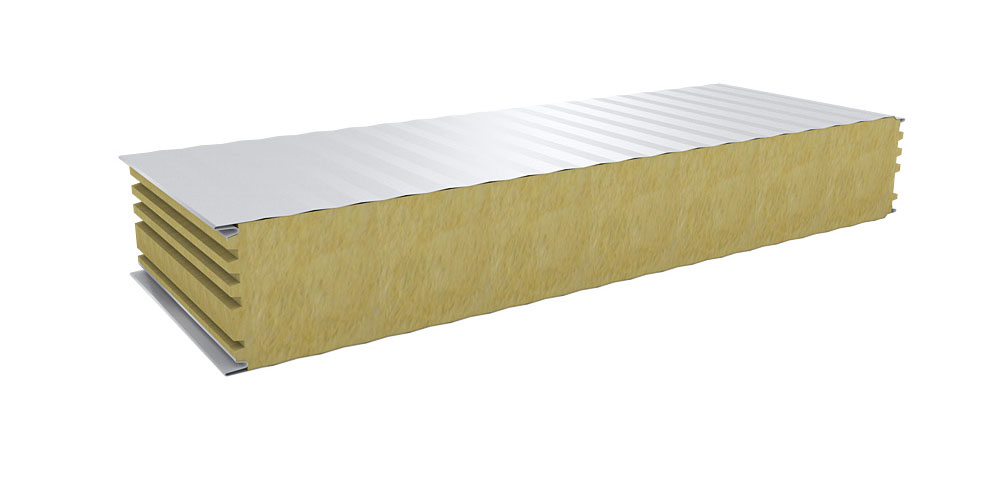
Sandwich panels are common insulation materials. They are used as exterior wall panels, floor, ceiling, and interior wall panels. Regardless of their applications, sandwich wall panels offer numerous benefits. In this post, we discuss choosing exterior wall panels. 

Tips for choosing the best exterior wall panels

The following are tips to consider when picking the best exterior wall panels

1. Consider the manufacturer

When shopping for products, the first thing you check is the brand or product manufacturer. The product brand contributes a lot to the product performance and quality. Therefore, it would be wise to choose one with a good reputation when selecting the best brand or manufacturer. It would also be wise to go for a brand with adequate experience. Brands that have been in the market for many years usually offer better products. This is because they have gained a superior understanding of the market, what clients want, and how to give it to them.

2. Consider the type of insulation material

Sandwich panels are characterized by the fact that they are made up of three (sometimes more) materials. The inner and outer (top and bottom) materials are usually thin metals. The core material, which is sandwiched between the two metallic parts is the insulation material. The type of insulation material used can significantly affect the qualities of the sandwich panel. When choosing the best sandwich insulation panel, you must consider the benefits and downsides of each type of insulation material. The most common insulation materials are:

  • Fiberglass- this material is applicable in unfinished walls and is easy to install
  • Mineral wool- also known as rock or slag, this insulation is great for foundation walls. It is typically installed between joints, beams, and studs.
  • Plastic fiber- this is a great insulation material for floors and ceilings
  • Natural fibers- this is a great insulation material for floors and ceilings
  • Polystyrene- this is a type of foam or rigid board ideal for unfinished walls and foundation walls
  • Polyisocyanurate- is also a type of foam or rigid board ideal for floor and ceiling insulation
  • Polyurethane- is ideal for floor, ceilings, and roof insulation.

Whether you choose foam board or blanket insulation, materials would help you understand what each type has to offer.

3. Consider the price of the product

Another important tip is to consider the price of the insulation panel. The price is typically affected by the brand, insulation type, and size. The quality of the insulation panel can also play a role in its price. When looking into the price, it would also help to consider the elements mentioned above. In addition to the price of the sandwich panels, you must also consider the cost of installation.

Conclusion

When choosing the best exterior wall panels, you must also consider your needs. What benefits do you look to achieve from the panels? Asking yourself this question will help you make the right choice. Your environment should also be at the top of your list of factors to consider when choosing exterior wall panels. However, you can always find versatile options that suit all climates.

July 28, 2021 0 comment
0 FacebookTwitterPinterestEmail
Uncategorized

Network Cable Connection vs Wifi Connection

by Jeremy Wall July 14, 2021
written by Jeremy Wall

Selecting the network cable may be perplexing. Which one do you need to get, and will you need additional special tools to operate it? Several considerations may arise when you choose whether or not to purchase it over a wifi connection. Don’t worry; you’ll get a comprehensive guide to network cable manufacturers and can choose the finest network based on your requirements.

Network cables, often known as Ethernet cables, are available in a wide range of configurations. Why would you need or desire a Network cable instead of WiFi? If you’re a gamer or want to stream 4K and HDR video, the Network cable is what you need. In addition, network Cable is the approach to have if you require unbreakable reliability.

Network cables enable IT miracles to occur. They link devices together and transport data over them. However, the phrase “Network Cable” seems to be somewhat of a catch-all.

Why Should Network Cables Be Used?

There are occasions when using network cables makes no logical sense. For instance, if you’re just playing about on an internet browser and enjoying Video clips, WIFI will be enough. Even if you watched Netflix in its normal settings, your Wifi adapter would be the most useful. However, as 4K streaming is popular, having a network cable makes more sense.

The same is true for huge file downloads, games, the atmosphere, video conferencing, and mass browsing.

Advantages of Network Cable over wifi Connection

Fast Connection

The Wi-Fi connection has a speed of 866.7 Mb/s. This is rather quick and efficient, but network cable connections using Cat6 cables may provide a speed of about 10 Gb/s.

Latency

It takes time for signals to go across from a wireless connection. While connecting a Network cable, it is often significantly lower.

Although Wi-Fi is vulnerable to a wide range of environmental variables, walls and ceilings may readily obstruct radio signals. Even the environment might be problematic.

Interference

A Network cable connectivity can be trusted on. You won’t have any problems after you’ve set things up. WIFI, on the contrary, is prone to interference. It results in a loss of signal.

Protection

Hackers can easily access your Wireless router. Despite the fact that you’ve got the most reliable system, somebody could easily hack it. With a Network Cable connection, nobody can access it until they physically link the network cable to their device.

Furthermore, with WIFI, information is everywhere. Therefore, if you choose a wifi network, anyone may simply intercept all of the information you transmit. It contains personal information as well as email accounts. Most Wireless networks offer secure access, but their effectiveness is controlled by their security approach.

Energy-efficient

Power-efficient network cables, such as Cat6 cables, use less power than Wireless networks, allowing you to save money.

WIFI vs Network Cables: Which Is Better?

  • Those looking for a network for regular usage can properly install a WIFI router.
  • Relying on a Wireless network is not optimal for gamers.
  • Ethernet ports are also seen on wireless networks. As a result, you may set up devices separately with no problems.
  • Users who want to view HD films without interruption can benefit from a network cable connection.

Will the next 5G Internet revolution supplant Network Cable?

The 5G era is creeping upon us. It is far quicker than the present link. It is accessible in various major cities around the United States. Although not in every area. As a result, it would take a long time till 5G becomes the standard internet connection. Even if it does reach the people, there seems to be no indication that it could render wired network cables obsolete.

As a result, it is always better to use an old-school network cable connection to access a high-speed net!

July 14, 2021 0 comment
0 FacebookTwitterPinterestEmail
Industry

How to Choose the Right Warehouse Location

by Jeremy Wall July 12, 2021
written by Jeremy Wall

Warehousing is very important for any type of business that handles goods. Choosing the best location for your warehouse is necessary to ensure the smooth shipment of goods to the customers. You can purchase or lease China warehouse, but the location is important as it ensures you serve your customers well and compete. When choosing a location, you should take time and compare it with the available options. After compiling the data and analyzing it, you can then make a sound decision. These are the crucial factors to consider when selecting a warehouse location.

Rent Rates and Taxes

The cost is an important factor to consider when choosing the location of the warehouse. However, it should not be the only factor. That is because there are hidden costs that can end costing you a lot of money in the long run. Depending on location, the rental rate for a warehouse is charged per square foot. Other than the rates, you need to consider government regulations, tax incentives, and tax structure. You should also consider government programs aimed at promoting businesses in your industry segment.

Workforce Availability

You should note that local demographics have an impact on labor costs, skills, and workforce availability. Remember that some geographical locations might not offer the right skills you need. Therefore, consider the local demographics of the city or state. Make sure you pay attention to the supply and demand of the workforce. Choose areas with a high level of workforce availability but with low demand. Some of the things to take into account include educational attainment, income levels, and characteristics. You can get this information from various government websites.

Infrastructure

You should consider proximity to highways, roads, and traffic flow. This is important if the main means of transportation is trucking. That is because transportation cost is determined by these variables, and it has an impact on how you can compete with your business rivals. Avoid areas with surface roads, congested highways, and poor signaling systems. That is because they can increase accident rates, time wasted, and fuel consumption.

Always prioritize the primary mode of transporting or shipping goods to the warehouse. For instance, if you are transporting your cargo by air, you should consider being close to the airport. Also, you should consider warehouses with access to roads and highways that connect to your desired airport.

Proximity to Market

Your warehouse should be located near producers, consumers, and suppliers. This is necessary to minimize lead times, increase responsiveness, and reduce transportation costs. In this case, you need to consider your major suppliers. Also, pay attention to environmental factors. That is because some goods should not be exposed to harsh weather conditions. Some areas have a higher risk of natural disasters than others. Make sure you pay attention to all these factors as they have an impact on day-to-day operations.

Utility Costs

As your business grows, you need to be flexible and adjust accordingly. There is a need to re-evaluate the factors if you are getting a new warehouse. Ensure you consider the cost of utilities. For instance, a refrigerated warehouse should be located in an area with water and electricity.

July 12, 2021 0 comment
0 FacebookTwitterPinterestEmail
Manufacturing

What is Flexo Printing and How is it Important?

by Jeremy Wall July 2, 2021
written by Jeremy Wall

A lot of people are not sure what flexo printing is about. Flexography is a printing technology that utilizes in-line rotary features. Thus, you can print different things on paper, metallic film, plastic, and cellophane. The good thing about Flexographic Printing Machines is that they provide the ability to print different lengths, use different inks, and much more.

Flexographic printing is based on rubber stamp printing that was common in the 1900s. The FDA found out that the inks utilized in the process were not safe, a few changes were necessary. For instance, the process was improved and new inks were used. In the past, flexo printing was associated with food packaging. However, with technological advancements, this technology is now used in other applications. It is estimated that about 70% of the food packaging industry uses this technology.

Flexo Printing Process

1. Pre-Press Process

This is an important process when it comes to flexo printing. That is because the process is high speed. As a result, errors in plate making can result in wastage of minerals and ink. There is a need to ensure the ink used can print neatly on the substrate.

2. Printing Process

You should note that each flexographic printing press has different printing stations, based on the number of colors required. At each station, the material passes through different rotary plates. Rollers used in the process can be classified into fountain rollers, anilox roller, impression cylinder, and plate cylinder.

3. Uses of Flexo Printing

Flexography allows for printing on different substrates such as uncoated or coated paper, plastic film, metal, and other substrates. The fact that various substrates can be printed on, means that flexography can be used to print foils, business forms, envelopes, wallpaper, newspapers, cartons, and food packaging.

How Flexography Compares with Other Printing Techniques

The truth is that flexo printing is a growing segment in the printing sector. In fact, advancements being made in this sector result in the production of quality prints. This is how this technology compares with other printing techniques.

1. Flexo Printing Versus Offset Printing

Offset printing and flexographic printing are widely used in producing different forms of prints. You should note that each method has its pros and cons. When it comes to offset printing, the image is transferred from the plate to the substrate. Ideally, flexo printing is more accurate than offset printing in transferring the image. Thus, you can enjoy high color accuracy and better printing speeds. Also, offset printing is limited to only smooth substrates.

2. Flexo Printing Versus Gravure Printing

When it comes to gravure printing technology, images are transferred into the substrate with the help of a metal place. On the other hand, flexo printing utilizes rubber plates. Thus, flexography is considered to be more diverse and versatile as compared to the gravure printing method.

3. Flexo Printing Versus Digital Printing

Digital printing is a new technology where there is no need for using printing plates. In this case, the ink gets to the substrate with the use of positive and negative charges. Since this is a new technology, it is not widely used but it is growing rapidly.

July 2, 2021 0 comment
0 FacebookTwitterPinterestEmail
Uncategorized

3D printing: How does this technology operate?

by Jeremy Wall June 29, 2021
written by Jeremy Wall

3D printing is also known as additive manufacturing. For those who don’t know what 3D printing is, it’s simply a process whereby digital files are used to create three-dimensional solid objects. In other words, it converts 2D files to 3D objects.

The 3D printed objects are produced via the additive process. The additive process involves placing layers of materials on top of each other until the desired object is created. There are several benefits, whether you want it for home use or offer 3D printing for sale as a service.

3D printing opposes subtractive manufacturing, which involves cutting out pieces of plastic or metal with a milling machine. The 3D printing process allows you to manufacture complicated shapes with less material, compared to conventional manufacturing methods.

Without further ado, let’s look at the different aspects of 3D printing and how it all comes together.

What you should know about 3D printing

1. 3D software

It all begins with the model, and this can only be controlled using software tools. Several software tools are available to suit different scales of operation (open source to industrial grade).

Some software tools are designed for beginners, while others are a bit complicated for newbies to understand. Do your research and find out which is best for you.

2. Rapid prototyping

Several companies have incorporated 3D printing into their rapid prototyping process since its inception. For those who don’t know what rapid prototyping is, it’s simply a process that fabricates physical parts or models using Computer-Aided Design (CAD).

3D printers are used in rapid prototyping because it’s affordable and relatively fast. When you have your idea, changing from model to prototype takes a couple of days instead of weeks or months. Iteration is cost-effective because you don’t need expensive tools.

3. Kinds of 3D printing technologies

As mentioned earlier, several kinds of 3D printing technologies exist for different purposes. However, there are 7 categories all kinds of additive manufacturing processes fall into, like material jetting, vat polymerization, powder bed fusion, material extrusion, sheet lamination, etc.

Under the Vat Polymerization category

  1. Digital Light Processing (DLP)
  2. Continuous Liquid Interface Production (CLIP)
  3. Stereolithography (SLA)

Under Powder Bed Fusion category

  1. Selective Laser Sintering (SLS)
  2. Multi Jet Fusion
  3. Direct Metal Laser Sintering (DMLS)

Under the Material Extrusion category

  1. Fused Filament Fabrication
  2. Fused Deposition Modelling

For home use, the recommended processes are the Vat polymerization process and Fused Deposition Modelling.

4. Applications of 3D printing

3D printing has several product applications in various fields. This is because it is a body formed by different materials and technologies from almost every industry that can be thought of. It has different applications because it serves different industries.

What are typical examples?

Consumer products, dental products, prosthetics, reconstructing fossils, movie props, manufacturing tools, end-use parts, architectural scale models, etc.

5. Industries that use 3D printing

Several industries employ 3D printing in their processes

For instance, in the automotive industry, car manufacturers have been using 3D printing processes for a while. They print spare parts, tools, end-use parts, etc. Because of 3D printing, on-demand manufacturing has become easier.

Other industries include aviation, consumer products, jewelry, healthcare, dentistry, etc.

June 29, 2021 0 comment
0 FacebookTwitterPinterestEmail
Newer Posts
Older Posts

Recent Posts

  • How Roll Up Door Brush Seals Prevent Pests and Dust from Entering Storage Units
  • Why Many People Choose Socket Weld Fittings for Today’s Piping
  • The Key Advantages of Wire EDM Service in Fine Component Manufacturing
  • Design to Filling: Tottle Bottle Production Process at UKPACK
  • How Bitget’s ETH to NZD Converter Helps Investors Make Smart Decisions

Copyright 2021. All Rights Reserved.


Back To Top
richcontentdaily.com
  • Home
  • Business
  • contact